
Clinton Eastwood Junior was born on May 31, 1930 to Clinton Eastwood and Ruth Eastwood. Clint also was born after his sister Jean. Clint's dad, (Clinton Sr.) was of Scottish-English descent and his mother Ruth Eastwood was of Irish descent. Clint's parents were very young when he was born and work during those great depression years was very hard to find. As both parents searched for work Clint and his family "drifted" all over California.
'Once we moved from
Sacramento to Pacific Palisades
(outskirts of Los Angeles) so that my dad could start work as a
gas
station attendant. It was the only job open.'
Clinton Eastwood Sr. sold stocks and bonds which didn't have much business in the early thirties. Clint is very proud of his parents work ethic which today is reflected on Clint's movies.
'I can't remember
us being poor or suffering as children. Maybe my father did have
his
worries but neither Jean nor I ever knew about them. When I look
back I know dad had
to think pretty fast at times because there were a lot of people
out of work in America
around the time I was born. He often moved from one stocks and
bonds company to another
to try and better himself. That's why although I was born in San
Francisco, my earliest memories
are of living in Oakland. It seems to me now that we didn't much
live in house at all - we lived in cars.
I can only remember a few of the places like Oakland, San
Francisco, Sacramento and Seattle.
The frustrating thing about moving around like this as a kid is
that you are constantly having to
make adjustments. Just as soon as I'd get to make a friend in a
place and start making progress with my studies, we would be on
the move again.' 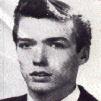
After many different towns Clint's family ended up in Oakland, California. There, Clinton Sr. had become an industrial efficiency expert with the Container Corporation of America and Ruth got a job with IBM. Clint registered with Oakland Technical High School. Clint graduated from High School in 1948 but during his High School years Clint had excelled at many things. He became very talented at basketball although never on a team he proved very good due to his height of 6.3ft. Clint also cruised through the academic subjects and along the way learned to play the piano and trumpet. Clint also acted in a school play. He was so terrified that he vowed never to act again. Clint's year book entry was: Eastwood, Clinton - Senior Day Committee. Senior Banquet Committee.
After graduating Clint worked many different jobs. Some of them were: Haybailer, Lumberjack, Truck Driver, Furnaceman at a steel mill, invoice filler at the Boeing Plant. Clint had always been interested in the logging business and that is why he worked at a milling operation on the Williamette River, near Eugene, Oregon. After a couple of days on the job he was almost killed.
"I heard a shout and looked up and saw that the crane driver and I hadn't quite gotten it organized. A nasty load of giant logs hung suspended over my head. I don't think that I have reacted faster in my life. Yet even as I started to run, down came the logs. Any one of them could have crushed the life out of me. I just barely jumped clear - as the logs hit the ground they jammed against the crane which was a lucky break for me."
While working, Clint's parents moved to Seattle. While there they convinced Clint to apply for a course in music at the Seattle University. Clint had decided to do it but before he could proceed he was called to serve at Ford Ord Military Base close to Moterey, California. After completing the sixteen weeks of training most of Clint's friends were sent to Korea for duty. Clint's name never came up and he became an assistant army swimming instructor. Even though clint never went to Korea he almost died but lived to tell this very dramatic story. Here's how he explained it to Douglas Thompson:
It wasn't the girls fault - she was real nice. I'd met her while visiting my folks in Seattle. I felt like seeing her again and mentioned it to a buddy who happened to be from Seattle. The problem was how to get there and back on a weekend pass. Besides, there was the money involved. He said he could fix it. He explained that if you were in the service and in uniform, the naval air station at Monterey would fly you wherever you were going, if they had an extra seat on the aircraft. So I got a pass and headed out to Monterey. Sure enough, I found a little reconnaisance plane and I was headed to Seattle. I flew in style. I saw my mother and father and Jean. Then I went out with this very nice girl . I felt like I'd had a great weekend when I took off for the air base to hitch a ride back. There was nothing leaving for the south. I sat there, feeling dismal, trying to figure out what to do. The problem was that I had fly back to camp in time or else I would be AWOL. So I hung around asking every pilot in sight. Finally, I heard there was a naval torpedo bomber going to San Francisco. They didn't have any seats of course. " Isn't there anywhere I could hang on?" I demanded desparately. " You could try the wings," said one of the pilots. He sized me up. "There's just one chance," he said. "But you are too big too sqeeze into the radar compartment. I'd have turned myself into a midget at the moment if necessary. This was a little cubbyhole in the tail, with a tiny door, a little porthole and a big panel of instruments. Nobody was actually supposed to fly in there, the door was just for the maintenance men. But, with a little shoving and pushing, they got me wedged in. From there on everything that could have gone wrong did. First, the compartment door sprung open and I nearly fell out. I guess I was putting a little strain on it. So there I was, a mile or so up and no parachute and holding on for dear life. There was a little button you pushed to talk to the pilot but the intercom wasn't working right and although I could hear him, he couldn't hear me. The pilot spotted the open door and warned me. He began shouting: "The door's open soldier! Shut the door if you don't want to fall into the drink!" I kept yelling back at him but he couldn't hear me. I can't say I was enjoying any of this - and even now, the thought is pretty grizzly. Anyhow, I yanked out a cable and got it looped round the handle of the open door; that kept it mostly shut. Thing's got worse fast! Before taking off, the pilot had warned me that he'd have to fly pretty high and I'd have to use the oxygen mask. As we climbed, I put the mask on my face, only to discover that it wasn't working. I fiddled desparately with it and tried to tell the pilot but he still couldn't hear me. Last thing I remember before blacking out was him sending a message saying that although he could transmit, he couldn't pick up anything. I remember nothing after that except a woozy, twilight feeling. Fortunately for me, the pilot's oxygen supply started going out, so he had to lose some altitude. It must have been an hour later when I became aware of what was going on again and realized that we'd hit California. It was easy to recognize because the whole place was socked in by fog. I could hear the pilot talking again. He was telling the base that he couldn't see anything so he was going to hang out to sea and try to get under the clouds. Our danger now was that if we stayed over land, we might crash into a mountain; the pilot had to stay low because of his oxygen. I wasn't really worried yet because I had a feeling that since I had gotten that far I would survive. Then as we began circling I remembered the fuel. I checked my watch and remembered that it had been two and a half hours since the pilot had radioed the fuel supply to him. I think I felt a little panic right then. I had no way of communicating with the pilot, I didn't know what kind of guy he was - would he eject and save himself? The pilot must have spotted a hole in the clouds because we dipped suddenly and went down fast. Next moment, I saw that we were over the sea. I could see the whole coast of California. The thing that I couldn't understand was why the pilot was flying over the water instead of going directely to the airport. Only later, did I learn that the pilot knew the plane was out of fuel and that he might crash on the city before making it to the airport. It was our lives against that of several hundred citizens. So there we wallowed, a few hundred feet above the sea, about a mile of the coast. And then the engine went out and it was a very deadening feeling. You could hear the air whistling - and I was watching the water and beaches and cliffs and particularly the cables leading to the pilot's canopy; I wanted to know when the pilot was going to leave the plane. I noticed that he had the flaps down and he was going to come down in the water. I started wondering if hte plane would float and began preparing for the moment we hit the water, wedging in so that I would ride the shock. The water was rough and I knew that it was going to be no easy landing. And then we were bouncing like a pebble skimming over water, and the ocean was shooting all over the place. You had the feeling that one moment you were in the air and next you were in a submarine. And then we stopped. We stopped with our nose down and our tail in the air. I found myself standing on the instrument board. I whipped off the cable holding the door and stepped out onto the back wings. The pilot was climbing out of his canopy and he leaped and landed beside me. He looked at me. Well, I hit the water and started to get out of there fast. I had an idea that if the plane started to sink, it would suck me down with it. So I didn't hang around. It was sunset when we had come down and now it was starting to get dark. There was a big swell and very soon we were separated. We shouted a couple of times but we were a long way from the beach and we needed every ounce of breath we had, so it became every man for himself. I don't know how long it took me to hit the beach, finally. But it was an ordeal I never want to go through again. When I was close to shore I had to struggle desperately because of the fierce undertow. Even when I had no more them 20 feet from the beach I still had to struggle because I wasn't safe. But inch by inch, I made it, until finally I felt the bottom under my feet. I don't know how long I had lay unconscious on the beach, but when I came to I was probably a little delirious. I vaguely remember running up and down the beach looking for the pilot, shouting his name until I was hoarse. I started imagining that every rock uncovered by the surf had been his body and I started darting across the beach like a madman. For a time, I consoled myself with the idea that he had probably come in a little distance away. Then, as I went several hundred yards in each direction looking for him, I felt certain that he had drowned, poor guy. I remember it was a peculiar contradictory feeling. I felt terribly depressed at this idea; yet strangely elated because it wasn't me. Anyhow, in the end, a little crazy by now, I guess, I began wandering off. I was barefoot, so I stayed at the water's edge rather than go inland. I went round some cliffs and there I saw the lights of a radio communications relay station about eigth miles in the distance. I don't remember anything except that I looked at the light and kept walking towards it. Later, the guys at the RC station told me: "When you came through that door, buddy, you looked like a survivor of the Titanic."
While in the army, Clint made two friends who were actors. They were Dave Janssen and Martin Milner who each had roles in television series'. They convinced Clint to move to L.A. with them. There, Clint enrolled in a business course at the colledge. While in L.A., Clint met his future wife Maggie. Clint and Maggie lived together in L.A where Clint got a job managing an apartment. While in L.A, Clint got bit by the acting bug and went for a screen test. Two weeks later he signed a contract with Universal for 75$ a week. His first film was Revenge of the Creature. In the same year Clint had several other roles in small "B" movies before his contract was ended with Universal Pictures.
While between jobs, Clint got the break of his life. He was
entering CBS to rendezvous with one of Maggie's friends when a
producer noticed him and asked him if he was an actor. Clint
answered yes and he was offered a co-starring role in the new CBS
western television series "Rawhide." Clint got the part
of Rowdy Yates, the second in command of the cattle drive. The
first ten episodes were made before any of them were shown on
television. They were filmed in September of 1958 but were
shelved because the network was nervous about adding another
western to the already packed lineup. It wasn't until December
befored CBS decided to air the show and it was a hit around the
world. Clint was very excited about the show and was satisfied
with the one project for the first few seasons. But after he
became famous world-wide Clint wanted to pursue other projects.
The people at CBS were very strict about his rights and Clint was
not allowed to accept anything. He was very frustrated with the
show and he threatened to boycott it before CBS finally gave him
some freedom. With the new found freedom Clint was open to
offers. One of them came from Italy. It was for a western to be
filmed in Spain by an Italian director named Sergio Leone. Clint
knew that the part was turned down by James Coburn and Charles
Bronson but on the basis that it would be nice to visit Europe,
Clint acepted the part. 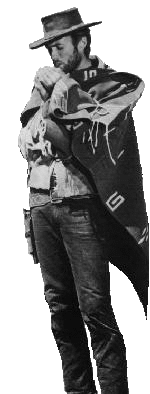
Clint Eastwood and Sergio Leone worked together to create A Fistful Of Dollars. The film was a remake of the classic Yojimbo. The films budget was $200,000. Clint was paid 15,000 for his role. The film was about a stranger who wanders into a town with two bosses. The stranger them works for both of them collecting money by giving tips to each one of them about the other. Clint recalls how tough it was to work with the film crew. He said how they were always arguing and one day when they didn't even show up Clint left a note saying that he could be found at the airport. Fortunately Sergio Leone caught him before he left the hotel and convinced him to stay. When A Fistful of Dollars was released in Europe in 1964, Clint was immediately shot to stardom. It wasn't until 1967 that the film was released in the U.S. due to copyright problems with relation to Yojimba. The film was so successful that they began work on a sequel in the same year. This film was titled For A Few Dollars More. This time, the film was about two bounty hunters who intend to collect the bounty for an escaped prisoner name Indio. Once again, the score was done by Ennio Morricone. Also, Gi an Maria Volonte was recast as the bad guy. Lee Van Cleef was introduced in this film as an Eastwood bounty hunting rival. The films budget was increased to $600,000. Once again it was a great success. After the two successful films done by Sergio Leone he had his film budget increased to $1,200,000. With the money he decided to create an epic western titled The Good, The Bad, And the Ugly. Clint Eastwood again was a bounty hunter who formed a partnership with a Mexican Bandit named Tuco. Clint (referred to as Blondie by Tuco) turns Tuco into the law and collect the bounty money. Then, when Tuco would be hanging by the rope, Blondie would use his rifle to cut the rope. After they made their escape, they would repeat the scam. But when the two find out about a chest full of gold they stop the scam and begin thier search for the gold. Eli Wallach was cast as the Mexican bandit. Lee Van Cleef was recast, this time as the bad Angel Eyes, who also had planned to collect the money. Together, with the excellent score by Ennio Morricone, the film was a masterpiece and considered by many to be the best of the trilogy and also one of the best westerns of the decade.
After his successes in Europe, it was time for Clint to return
to America. When he returned, he and his wife Maggie made some 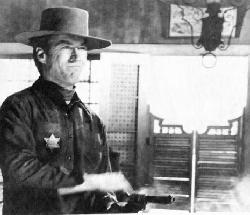 decisions about his career. Clint concluded that "I can
screw up my career just as much as anybody else", so he
decided to start his own movie production company. He titled it The
Malpaso Company, named after a creek that runs through his
property in Carmel. The Spanish translation of Malpaso is
"Bad Step" but the move was anything but that and it's
first production was Hang 'Em High. A film about an innocent man
hung by a lynching mob for a crime that he didn't do. When saved
in the nick of time by a passing Marshall, the man, Jed Cooper,
becomes a Marshall in Oklahoma and gets his revenge on the nine
men who hung him. It was directed by Ted Post who had previously
worked with Clint on several Rawhide episodes. The movie
continued Clint's success and brought his salary up to 450,000
dollars. In the same year Clint took on a new project called
Coogan's Bluff. It was about an Arizona lawman who journeys into
the big city to catch a killer. The film was the first time Don
Siegal and Clint were paired together. Critics liked the film and
it did well at the box office. Just after completing Coogan's
Bluff, Clint flew to London to co-star with Richard Burton in
Where Eagles Dare. Clint received $750,000 for the role and
received second billing to the famous Richard Burton. The film,
which included some excellent stunt work, was the first of two
movies in which Brian G. Hutton directed Clint. Clint's first son
Kyle was born while he was in Europe filming Where Eagles Dare.
When Clint returned to the U.S. he was asked to star in a musical
with Lee Marvin. The film, Paint Your Wagon, had a huge 20
million dollar budget, but Clint later commented on how much
money he thought was wasted. He said that due to the location of
the shooting, everthing had to be flown in by helicopter which
wasted a lot of money. The movie was about two gold searchers
who, while panning for gold, lived a life style in which both of
them shared the same wife. The film was poorly received at the
box office and became Clint's first miss.
decisions about his career. Clint concluded that "I can
screw up my career just as much as anybody else", so he
decided to start his own movie production company. He titled it The
Malpaso Company, named after a creek that runs through his
property in Carmel. The Spanish translation of Malpaso is
"Bad Step" but the move was anything but that and it's
first production was Hang 'Em High. A film about an innocent man
hung by a lynching mob for a crime that he didn't do. When saved
in the nick of time by a passing Marshall, the man, Jed Cooper,
becomes a Marshall in Oklahoma and gets his revenge on the nine
men who hung him. It was directed by Ted Post who had previously
worked with Clint on several Rawhide episodes. The movie
continued Clint's success and brought his salary up to 450,000
dollars. In the same year Clint took on a new project called
Coogan's Bluff. It was about an Arizona lawman who journeys into
the big city to catch a killer. The film was the first time Don
Siegal and Clint were paired together. Critics liked the film and
it did well at the box office. Just after completing Coogan's
Bluff, Clint flew to London to co-star with Richard Burton in
Where Eagles Dare. Clint received $750,000 for the role and
received second billing to the famous Richard Burton. The film,
which included some excellent stunt work, was the first of two
movies in which Brian G. Hutton directed Clint. Clint's first son
Kyle was born while he was in Europe filming Where Eagles Dare.
When Clint returned to the U.S. he was asked to star in a musical
with Lee Marvin. The film, Paint Your Wagon, had a huge 20
million dollar budget, but Clint later commented on how much
money he thought was wasted. He said that due to the location of
the shooting, everthing had to be flown in by helicopter which
wasted a lot of money. The movie was about two gold searchers
who, while panning for gold, lived a life style in which both of
them shared the same wife. The film was poorly received at the
box office and became Clint's first miss.
Clint's next three projects brought the return of
previous directors that he had worked with. Two Mules For Sister
Sara was a western directed by Don Siegal co-starring Shirley
Maclaine. Clint first heard about the idea while filming Where
Eagles Dare. He and Elizabeth Taylor had discussed doing the
project together but when the movie studio couldn't afford her
expensive salary, the part went to Shirley Maclaine. She played a
nun who is saved from Mexican bandits when a passing stranger
rescues her. Then the man named Hogan, joins her cause to help
her rebel against the French. The film was received well and it
was on to the next project for Clint. The project was The
Beguiled. directed by Don Siegal, Clint played a wounded civil
war soldier who is taken into an all girls school for protection
from the enemy. There he has several relationships with the
women. In the end, his leg is amputated and the girls try to
poison him. He doesn't get poisoned but he later dies of natural
causes. The movie was considered a masterpiece in Europe, but
American audiences didn't like seeing their hero die and the
movie did poorly. Director Brian G. Hutton appeared for Clint's
next film. The film was titled The Warriors before the name was
changed to Kelly's Heroes. It was another war story, where Clint
plays a soldier. In the film, he and his men plan on stealing 16
million in gold from the Germans while having some free time.
Clint felt that the movie could have been one of the best war
films of all time, if certain cuts weren't made to the script
before filming.